Weight Equivalents: Pomegranates
Article by Gil "hannaone"
© Copyright 2007-2025. All rights reserved.
Image by hannaone
Weight and nutrition information obtained from USDA food database or Korean Standard Food Composition Tables
Pomegranates have a rich history, unique characteristics, and numerous health benefits.
Origin and History
Pomegranates (Punica granatum) are believed to have originated in the region extending from modern-day Iran to northern India. They have been cultivated for thousands of years and were highly valued in ancient civilizations, including those of Egypt, Greece, and Rome. The fruit is often associated with fertility, prosperity, and abundance in various cultures and has been mentioned in numerous religious texts and myths.
Varieties
There are several varieties of pomegranates, each with unique characteristics. Some popular varieties include:
Wonderful: The most widely grown variety in the United States, known for its large, sweet-tart arils (seeds) and deep red skin.
Haku Botan: A Japanese variety with large, sweet, and slightly tangy arils.
Eversweet: A variety with soft seeds and sweet, non-acidic arils.
Kandahar: A variety from Afghanistan, known for its large size and sweet, juicy arils.
How to Choose Pomegranates
When selecting pomegranates, consider the following tips:
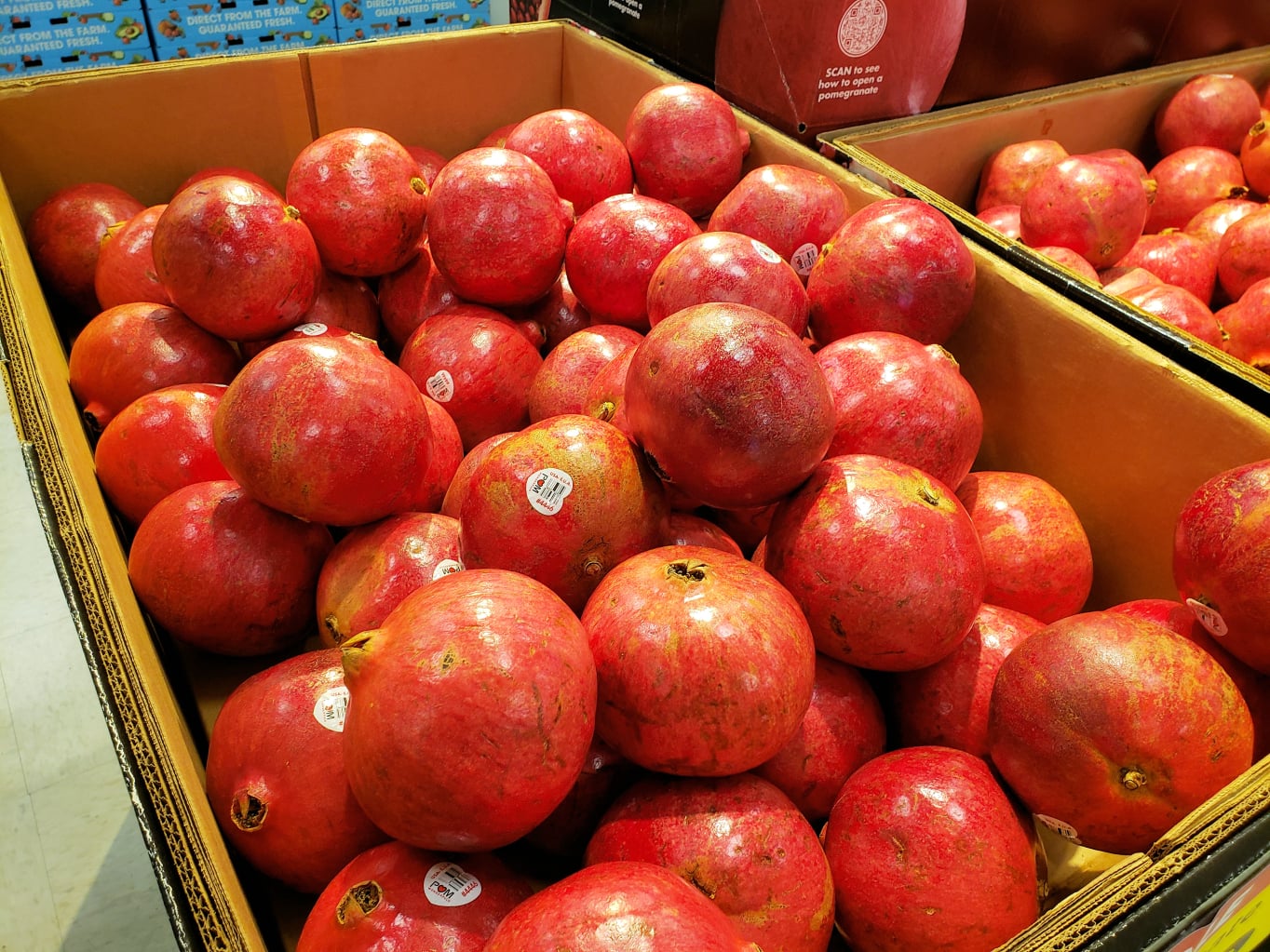
Appearance: Look for a pomegranate with a deep, vibrant color. The skin should be free of cracks and blemishes.
Weight: A ripe pomegranate will feel heavy for its size, indicating that it is full of juice.
Texture: The skin should be firm and slightly glossy. Avoid pomegranates that are too soft or have wrinkled skin.
Potential Health Benefits
Pomegranates are packed with nutrients and antioxidants, offering several potential health benefits:
Rich in Antioxidants: Pomegranates are high in polyphenols, which help protect cells from damage caused by free radicals.
Anti-Inflammatory: The fruit's antioxidants have anti-inflammatory properties that may help reduce inflammation in the body.
Heart Health: Pomegranates may help lower blood pressure, reduce cholesterol levels, and improve overall heart health.
Cancer Prevention: Some studies suggest that pomegranates may have anti-cancer properties, particularly in reducing the risk of prostate and breast cancer.
Digestive Health: The fiber in pomegranates can aid in digestion and promote a healthy gut.
Uses
Pomegranates are incredibly versatile and can be enjoyed in various ways:
Fresh: The arils can be eaten as a snack, added to salads, or used as a garnish.
Juice: Pomegranate juice is a refreshing beverage and can be used in cocktails, smoothies, and marinades.
Cooking: Pomegranate molasses, made from reduced pomegranate juice, is used in Middle Eastern cuisine to add a tangy-sweet flavor to dishes.
Baking: Pomegranate seeds can be used in desserts like cakes, tarts, and puddings.
Sauces and Dressings: Pomegranate juice and seeds can be incorporated into sauces and dressings for a burst of flavor.
Substitutes
If you don't have pomegranates on hand, there are several suitable substitutes depending on the recipe:
Cranberries: Fresh or dried cranberries can provide a similar tartness and texture in salads and sauces.
Red Currants: Red currants have a similar tangy flavor and can be used as a substitute in various dishes.
Cherries: Fresh or dried cherries can be used in place of pomegranates in some recipes, especially in desserts and salads.
Raspberries: Raspberries can provide a similar burst of flavor and color in dishes where pomegranate seeds are used.
🍎
❤️How much does a Pomegranate weigh?
| Pomegranate | |||
|---|---|---|---|
| 1 Fruit |
average |
282g | 9.9oz |
| Cup, juice sack |
87g | 3oz | |
| |||||||||||||||||||||||||||||||||||||||||||||||||||||||||||||||



Comments